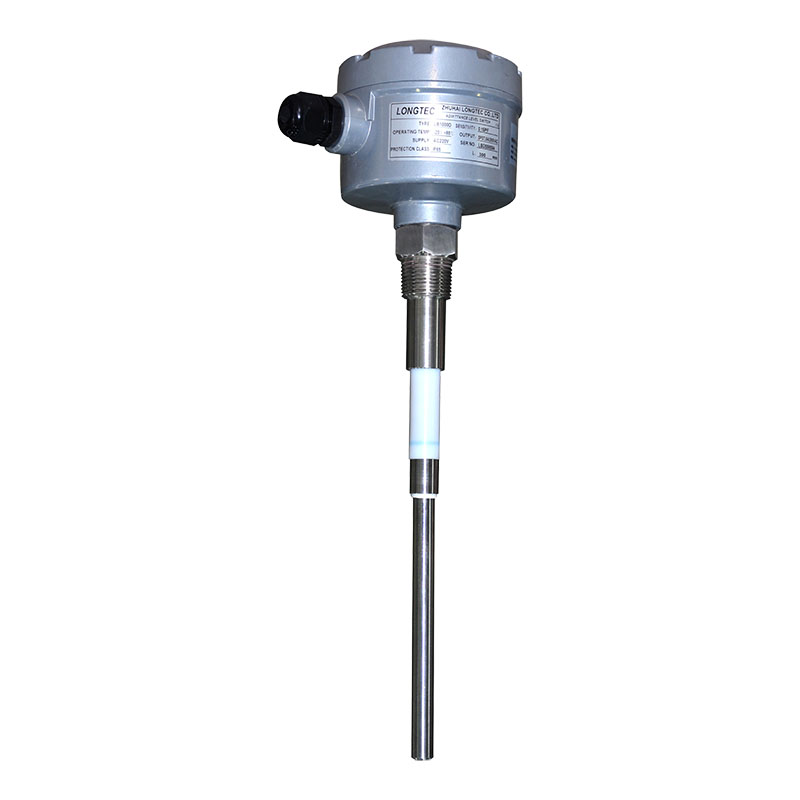
The structure of the RF admittance level switch is divided into two parts: the main electrode and the compensation electrode. Apply a set of RF signals between the main electrode and the compensation electrode. When the material is attached, the internal amplifier amplifies the signal, and the compensating electrode provides a signal to the main electrode to reset the signal level, ignoring the currently attached material. The phase and potential of the compensating electrode RF signal are the same as those of the main electrode RF signal, which is used to cancel out the signal generated by the adhesion of the material to the induction rod, achieving the function of correctly determining whether the material induced by the material level switch action is normal material or material adhesion on the induction rod, and providing the correct material detection signal.
Selection Table
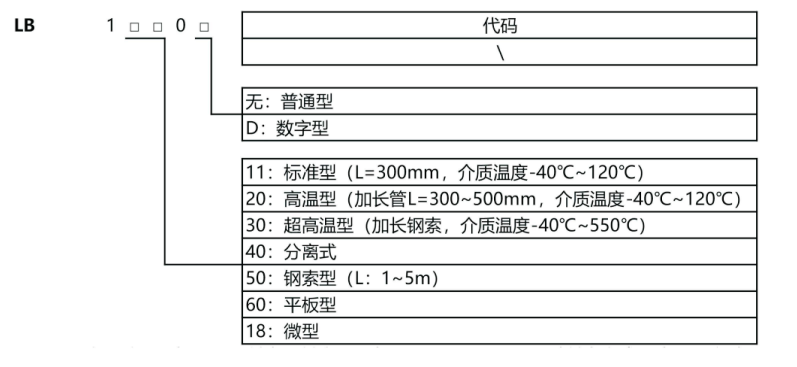
Note: Micro models are only powered by DC24V, while other models have two power supply options: DC24V and AC220V. Please specify when ordering.
Feature
Not affected by material adhesion
Good stability, not affected by temperature
LP65 protective shell
Temperature resistance up to 550 ℃
Easy to install and debug
Adjustable delay output 0-32 seconds
There are many types of probe rods
Explosion proof and anti-corrosion optional high and low position failure protection function
Application field
Level detection, control, and interface detection of various liquids, powders, and particles such as powder silos, water wells, water tanks, medicine barrels, acid and alkali barrels: asphalt plants, paper plants, glass plants, beer plants, cement plants, paint plants, pharmaceutical plants, power plants, coking coal plants, coal mines, food plants, flour plants, beverage plants, and sewage treatment plants.